
Cognitive Behavioral Therapy - CBT
How We Help
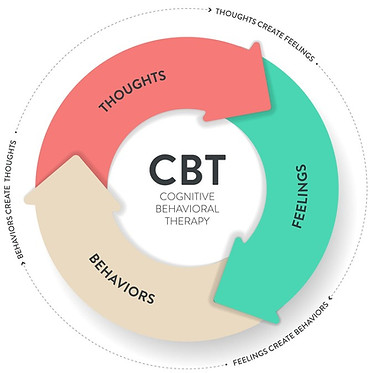
Sometimes the loop is familiar. A stressful thought triggers a wave of anxiety. The anxiety pushes you toward avoidance. Then the avoidance quietly confirms the original fear.
Cognitive Behavioral Therapy exists to interrupt this exact cycle. It's one of the most extensively researched forms of psychotherapy available today. Prime specializes in CBT and you'll see the results.
CBT teaches you how to slow down the moments between your thoughts and reactions. It gives you practical tools and strategies to use inside and outside your therapy sessions. You'll create meaningful, lasting change in how you think, feel, and move through your daily life over time.
CBT is available at Prime Therapy through individual therapy, in-person at our Bedminster, NJ office and virtually via Telehealth throughout New Jersey.

Prime is a Leader for CBT
CBT from Prime Therapy
Cognitive Behavioral Therapy is an evidence-based approach that helps you understand
how your thoughts, emotions, and behaviors influence one another.
It’s a structured, skills-based therapy that teaches practical tools to use both in and outside of sessions, making it highly effective in creating meaningful change in a shorter number of sessions in comparison to other forms of therapy.
CBT is one of the most widely used and well-researched treatments for anxiety, depression, chronic stress, ADHD, panic attacks, obsessive-compulsive patterns, etc. It is highly adaptable, meaning it can be tailored to fit each individual client and can be used alone or together alongside other therapies.
At its core, CBT aims to reduce distress, interrupt unhelpful patterns, and help build practical skills that support long-term well-being.
How CBT Works in Practice, And at Prime
CBT helps you understand and change the patterns that may be keeping you stuck. This approach works by shifting thoughts and behaviors that reinforce anxiety, depression, or avoidance, and replacing them with more effective responses and beliefs.
At Prime Therapy, the goal for CBT is to help you understand how your thoughts shape your feelings and actions in a way that guides you to respond with greater clarity and resilience.
This works by using cognitive restructuring to identify and challenge unhelpful thought patterns. And exposure exercises to gradually face situations that feel overwhelming. And behavioral experiments to test beliefs and predictions in everyday life scenarios.
The specific skills and principles of CBT that we use in individual therapy sessions are tailored to fit you and your goals. Together, you'll work with your therapist to build routines and problem-solving skills. We'll work together with you to create incremental, achievable steps toward your long-term goals.
CBT is available in-person at Prime Therapy through Individual Therapy at our Bedminster, NJ office and virtually via Telehealth throughout New Jersey.
CBT From Prime Therapy Helps

Cognitive Behavioral Therapy is one of the most widely used and well-researched therapies. It's used extensively for anxiety, depression, ADHD, panic attacks, and obsessive-compulsive patterns.
CBT is also commonly used for stress management and coping strategies for individuals with chronic health conditions.
CBT helps you to understand how your thoughts, feelings, and behaviors are all connected. It helps you understand and apply more balanced and effective ways of responding to challenging situations.
Research has proven CBT to be very helpful for all populations and ages, including teens, young adults, and adults.
Prime Takes the Trusted Approach to CBT
Clients trust our approach to Cognitive Behavioral Therapy at Prime because they know they’ll be met with genuine connection and clinical expertise. And because the welcoming space we’ve created here allows real change to take hold.
Our team of licensed clinicians are trained in trauma-informed care and cognitive-behavioral principles, ensuring their therapeutic approach is compassionate, collaborative, and tailored to each individual client and their goals.
We'll set clear treatment goals and track your progress together. You'll always know where you stand and can see change over time rather than feeling left to wonder if therapy is even working.
Frequently Asked Questions
How is CBT different from other therapies?
CBT is more structured and goal oriented than open ended talk therapy. You'll work on specific patterns of thinking and behavior. You'll develop concrete strategies with some between session practice. Other therapies are often just open-ended.
How long does CBT typically take?
The time frame varies. Many clients see meaningful change within 12 to 20 sessions. It depends what you're working on, and its complexity. Your therapist will work with you to define an estimated timeline based on your specific goals.
Will I have homework?
Often times, Yes — Between-session practice — like tracking thoughts, testing a behavioral experiment, or practicing a coping skill — is a core part of how CBT creates lasting change, though your therapist will work with you to keep it realistic for your life and experience.
Is CBT different from other therapies I've tried?
Yes. CBT has a structured, skills-based approach that's different from more open-ended therapy models. Many clients who felt stuck in less directive therapy find CBT's clarity and practical tools more effective.
Is CBT available virtually via Telehealth?
Yes. Both individual CBT sessions and skills groups are available virtually, in addition to our in-person options.